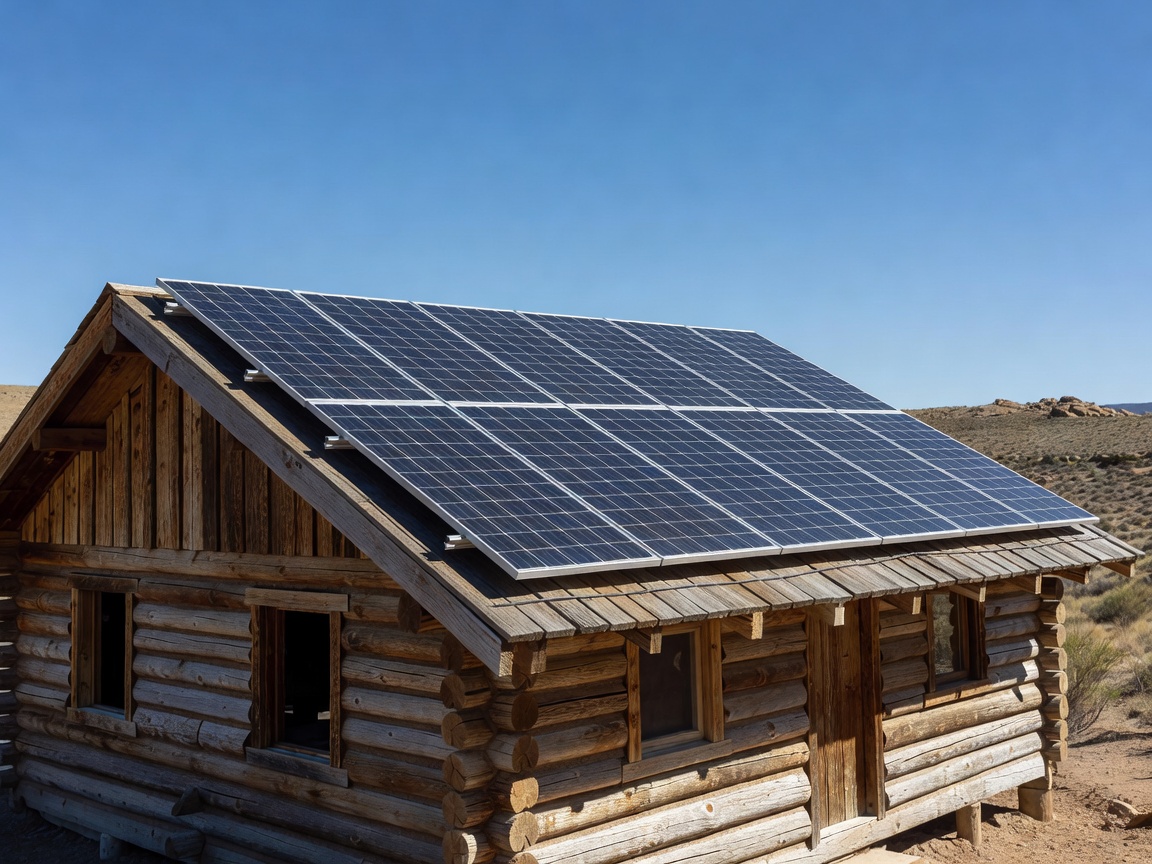
Transitioning to off-grid energy independence requires careful calculation of daily energy demand versus rooftop solar generation capacity. In a typical 200 square foot tiny house, energy efficiency is non-negotiable.
1. Audit Your Daily Watt-Hour Consumption
Before purchasing solar panels, you must quantify daily energy use in Watt-hours (Wh). Below is a typical energy budget for an energy-conscious tiny house resident:
- Energy Star 12V Compressor Fridge: 450 Wh/day
- LED Warm Lighting Circuit: 80 Wh/day
- Laptop & Mobile Device Charging: 220 Wh/day
- Water Pump (12V High Flow): 60 Wh/day
- Induction Cooktop (30 mins daily): 900 Wh/day
- Total Estimated Daily Load: ~1,710 Wh/day
2. Sizing the Lithium Iron Phosphate (LiFePO4) Battery Bank
Unlike old AGM lead-acid batteries, LiFePO4 chemistry allows a 100% depth of discharge (DoD) without rapid cell degradation, while weighing 60% less. For a 1,710 Wh daily consumption with 2 days of energy autonomy for cloudy weather, a 24V 200Ah battery bank (approx 5,120 Wh total reserve) is recommended.
3. Solar Panel Selection & Roof Mounting
To replenish a 1.7 kWh daily draw under an average of 4 peak solar hours daily, a solar array rated at 600W to 800W is required. Rigid monocrystalline solar panels mounted with tilt brackets optimize angle efficiency during winter months.
4. Pure Sine Wave Inverters & Charge Controllers
Always pair your photovoltaic array with an MPPT (Maximum Power Point Tracking) solar charge controller, which delivers up to 30% higher charging efficiency compared to PWM controllers. Ensure your inverter produces Pure Sine Wave AC power to protect delicate electronics, laptops, and variable-speed appliance motors.